
How to Maintain a Pool: Complete Guide for Homeowners
1. What Is Pool Maintenance and Why Is It Important?
Pool maintenance refers to the regular care and upkeep required to keep your swimming pool clean, safe, and functioning properly. It involves cleaning debris, balancing chemicals, and inspecting equipment to ensure everything works efficiently.
Proper maintenance is essential because it prevents algae growth, keeps water safe for swimming, and extends the lifespan of your pool. Without consistent care, water quality can quickly deteriorate, leading to costly repairs and health risks.
Ready to keep your pool in perfect condition year-round? Visit our Home Page to explore how Desert Rock Pools helps homeowners maintain and upgrade their backyard pools with expert solutions.
2. How Often Should You Maintain a Pool?
Maintaining a pool is not a one-time task—it requires a consistent schedule. Daily tasks like skimming leaves and debris should be done quickly, while weekly and monthly tasks include deeper cleaning and chemical balancing.
Creating a routine ensures that your pool remains in top condition. A structured approach helps avoid problems such as cloudy water or equipment failure. Following a consistent pool maintenance checklist makes it easier to stay organized and avoid missing important steps.
3. What Are the Essential Pool Maintenance Tasks?
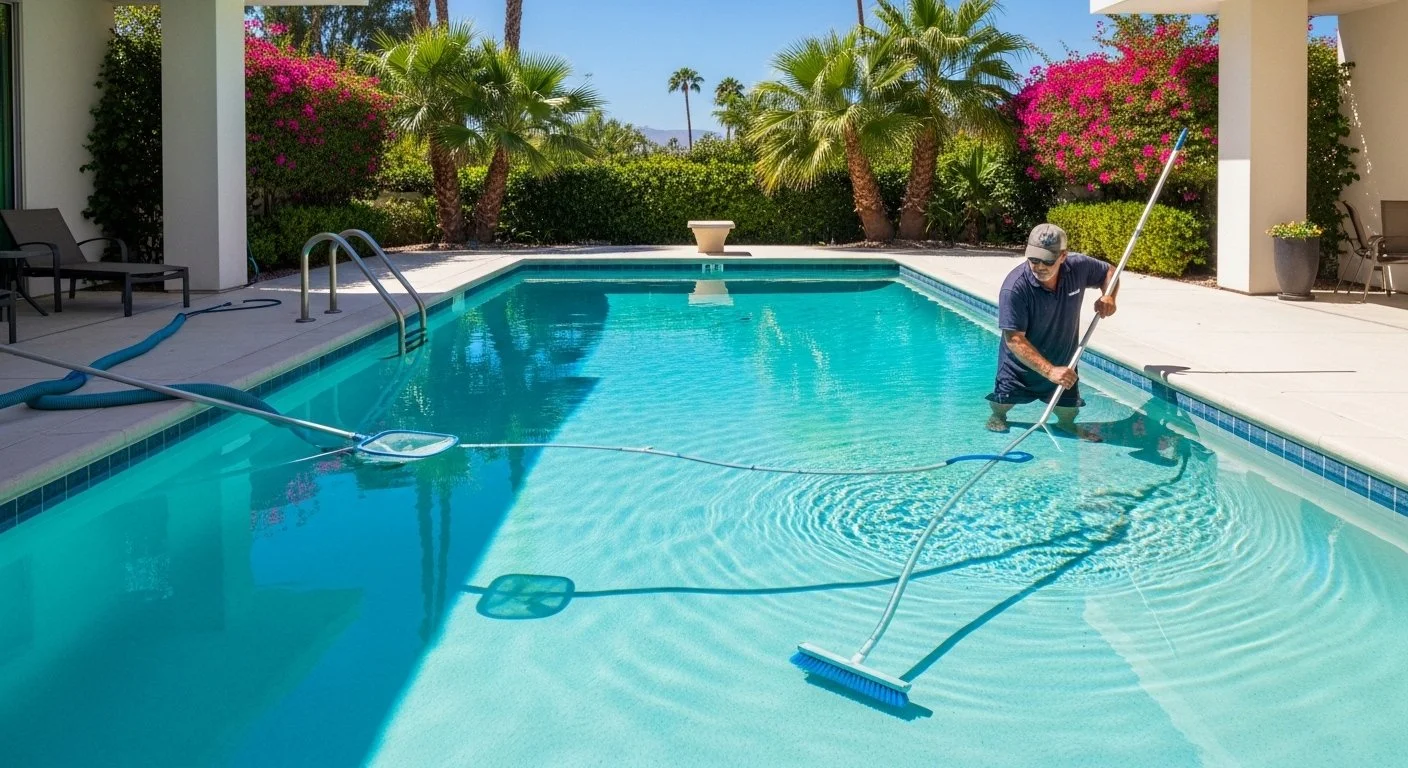
Basic pool care involves several recurring tasks that every homeowner should follow. These include skimming the surface, brushing the walls, vacuuming the floor, and cleaning filters.
Maintaining a proper pool cleaning routine ensures debris doesn’t accumulate and water stays clear. Regular brushing prevents algae buildup, while vacuuming removes dirt that settles at the bottom.
Consistency is key when it comes to maintaining a healthy and visually appealing pool.
4. How Do You Balance Pool Water Chemistry?
Water chemistry plays a critical role in pool maintenance. Keeping the right balance of chemicals ensures safe swimming conditions and prevents bacteria growth.
Monitoring pH levels, chlorine, and alkalinity is essential. Regular testing allows you to adjust chemicals as needed. Proper pool water maintenance helps maintain clear water and prevents irritation to swimmers’ skin and eyes.
A well-balanced pool also reduces strain on equipment, helping everything run smoothly.
5. How Do You Clean a Pool Step by Step?
Cleaning your pool involves a structured process. Start by removing debris from the surface using a skimmer. Next, brush the walls and tiles to loosen dirt and algae. After that, vacuum the pool floor to remove any settled debris.
Finally, check and clean the filtration system to ensure efficient water circulation. Following a consistent cleaning process is one of the most important pool maintenance tips for homeowners who want long-lasting results.
6. How Do You Maintain Pool Equipment Like Pumps and Filters?
Your pool’s equipment is just as important as the water itself. Pumps and filters keep water circulating and clean, making them essential components of your system.
Regular inspection and cleaning ensure that everything functions properly. Proper pool pump maintenance helps prevent breakdowns and improves energy efficiency. Cleaning filters regularly also ensures debris is effectively removed from the water.
Neglecting equipment maintenance can lead to poor water quality and expensive repairs.
7. What Are Common Pool Problems and How Can You Fix Them?
Pool owners often face issues like cloudy water, algae growth, and low chlorine levels. These problems usually arise due to poor maintenance or imbalanced chemicals.
Cloudy water can be fixed by improving filtration and balancing chemicals. Algae growth requires proper cleaning and shock treatment. Keeping up with maintenance reduces the chances of these issues occurring in the first place.
Regular monitoring helps you identify problems early before they become major concerns.
8. How Do Seasonal Changes Affect Pool Maintenance?
Different seasons require different maintenance approaches. During summer, pools are used more frequently, so cleaning and chemical balancing must be done more often.
In colder months, maintenance focuses on protecting equipment and preparing the pool for reduced usage. Adjusting your maintenance routine based on weather conditions ensures your pool remains in good condition throughout the year.
9. What Safety Measures Should You Follow for Pool Maintenance?
Safety is a crucial aspect of pool ownership. Handling chemicals carefully, storing them properly, and keeping them out of reach of children is essential.
Slip-resistant surfaces, proper fencing, and clear signage can help prevent accidents. Regular inspection of the pool area ensures that everything remains safe for users.
10. When Should You Hire Professional Pool Maintenance Services?
While many tasks can be handled by homeowners, there are times when professional help is necessary. Complex issues, equipment repairs, or persistent water problems may require expert attention.
Professional services ensure thorough inspections and proper maintenance. If you prefer convenience and peace of mind, hiring experts can save time and effort while keeping your pool in excellent condition.
Looking for expert help with pool maintenance or upgrades? Check out our Services Page to discover professional pool care, cleaning, and maintenance solutions tailored to your needs.
11. Conclusion
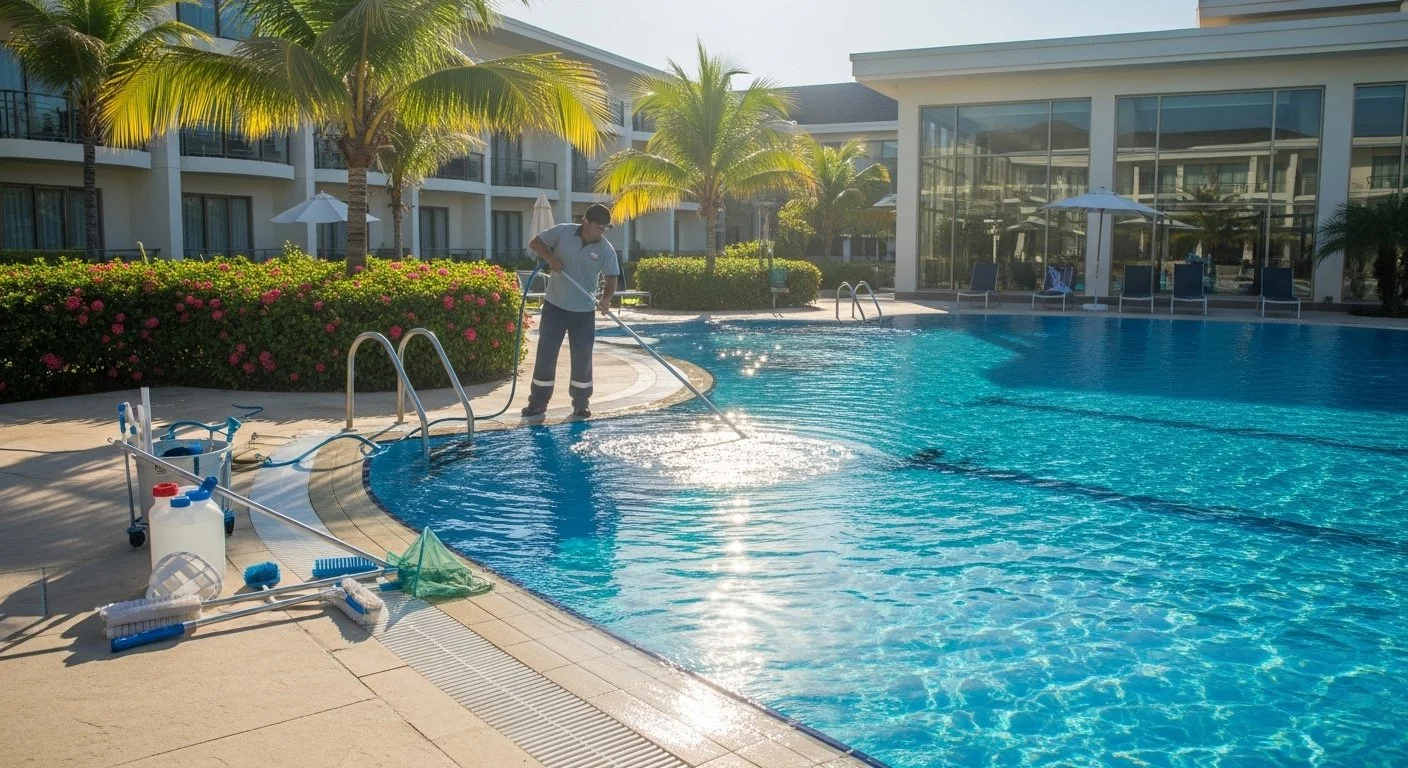
Maintaining a pool requires consistency, attention to detail, and the right approach. From cleaning routines and chemical balancing to equipment care and seasonal adjustments, every step plays an important role in keeping your pool safe and enjoyable.
By following a structured maintenance plan and staying proactive, homeowners can avoid common problems and extend the life of their pool. Whether you manage maintenance yourself or seek professional help, proper care ensures your pool remains a valuable part of your home for years to come.
Have questions or need professional pool maintenance support? Contact us today and let Desert Rock Pools help you keep your pool clean, safe, and ready to enjoy.
12. FAQs
1. How often should I clean my pool? Pools should be skimmed daily, with deeper cleaning and chemical balancing performed weekly to maintain proper water quality.
2. What is included in regular pool maintenance? Regular maintenance includes skimming debris, brushing surfaces, vacuuming, testing water chemistry, and cleaning filters.
3. How do I know if my pool water is balanced? Balanced water has proper pH, chlorine, and alkalinity levels. Regular testing helps ensure safe swimming conditions.
4. Why is my pool water cloudy? Cloudy water is usually caused by poor filtration, unbalanced chemicals, or debris buildup.
5. When should I call a professional pool service? You should call a professional when you encounter persistent issues, equipment failures, or need comprehensive maintenance support.