
Gunite Pool vs Concrete Pool: What’s the Difference?
Introduction
Choosing the right type of pool is one of the most important decisions when planning a backyard transformation. Among the most common options, homeowners often compare gunite and concrete pools due to their durability, design flexibility, and long-term value. Understanding the differences between these two in-ground pool materials can help you make a confident, informed choice that fits your lifestyle, budget, and design preferences.
If you're planning to build a custom backyard pool and want expert guidance, explore our Home Page to see how Desert Rock Pools can turn your vision into reality:
What Is a Gunite Pool?
A gunite pool is a type of swimming pool constructed using a mixture of sand, cement, and water that is sprayed onto a reinforced steel framework at high pressure. This method allows for strong, durable structures that can be shaped into virtually any design.
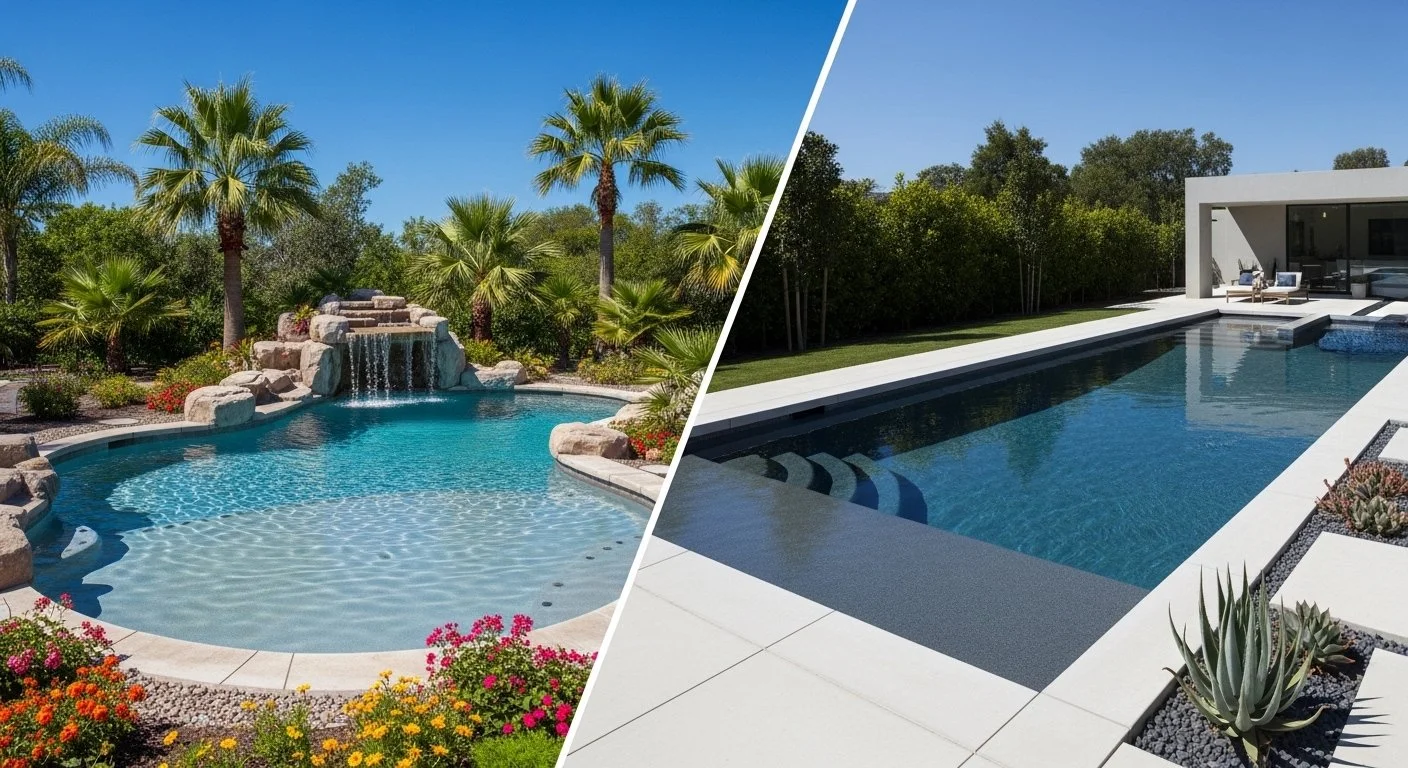
A gunite swimming pool is especially popular for homeowners who want fully customized layouts, including curves, deep ends, integrated spas, and luxury features like waterfalls and tanning ledges. Because of its flexibility, gunite is often the preferred choice for high-end residential projects.
What Is a Concrete Pool?
Concrete pools are one of the oldest and most traditional types of pools. They are built using poured or sprayed concrete materials, forming a solid shell that is reinforced with steel.
During the concrete pool installation process, the structure is formed on-site, allowing for a strong and long-lasting foundation. These pools are known for their durability and ability to withstand different environmental conditions, making them a reliable option for long-term use.
Gunite Pool vs Concrete Pool: Key Differences
When comparing these two options, it’s important to understand the gunite vs concrete pool differences in terms of construction, design flexibility, and performance.
Gunite pools are typically applied using a dry mix sprayed with water at the nozzle, while traditional concrete pools rely on poured or sprayed wet concrete methods. Both create a strong shell, but gunite often allows for more intricate shapes and smoother application control.
Another key difference lies in customization—gunite pools provide more freedom in design, while concrete pools may have some limitations depending on the construction approach used.
Design Flexibility and Customization
One of the biggest advantages of gunite pools is their design versatility. Whether you want a modern geometric shape, a freeform lagoon style, or a pool integrated with a spa, gunite allows for highly customized layouts.
Concrete pools also offer design options, but they are generally less flexible compared to gunite structures. However, both types can be enhanced with features such as lighting, tile finishes, and landscaping elements to create a visually appealing outdoor space.
Durability and Lifespan Comparison
Both gunite and concrete pools are known for their strength and longevity. With proper maintenance, these pools can last for decades.
Gunite pools are highly resistant to structural damage due to their dense composition and reinforced steel framework. Similarly, concrete pools are also durable, but their lifespan depends heavily on maintenance practices, soil conditions, and environmental factors.
In terms of in-ground pool materials, both options rank among the most durable choices available for homeowners seeking long-term investment.
Cost Comparison (Upfront + Long-Term)
Cost is an important factor when choosing between these two pool types. Gunite pools typically have a higher upfront cost due to labor-intensive construction and customization options.
Concrete pools may also involve significant costs, depending on the design and complexity. Over time, maintenance, resurfacing, and repairs can add to the total investment for both types.
Ultimately, the overall cost depends on size, design features, and additional elements such as lighting, spas, and landscaping.
Maintenance Requirements
Maintenance plays a key role in the long-term performance of your pool. Gunite pools require regular cleaning, chemical balancing, and occasional resurfacing to maintain their appearance and functionality.
Concrete pools also require similar maintenance routines, including water chemistry management and surface care. Over time, both types may need resurfacing to restore the interior finish and ensure smooth performance.
Installation Time and Process
The installation process for these pools varies depending on design complexity and site conditions.
Gunite pools generally take several weeks to complete due to excavation, steel reinforcement, spraying, curing, and finishing stages. The process allows for customization at each step.
Concrete pool installation follows a similar timeline, involving site preparation, structural formation, plumbing, and finishing work. Weather conditions and project size can also impact the overall duration.
Pros and Cons of Gunite Pools
Pros:
Highly customizable designs
Strong and long-lasting structure
Ideal for luxury and complex layouts
Cons:
Higher initial cost
Longer construction timeline
Requires regular maintenance
Pros and Cons of Concrete Pools
Pros:
Durable and stable construction
Suitable for long-term use
Can be customized to a certain extent
Cons:
Limited design flexibility compared to gunite
Surface may require more frequent maintenance
Installation process can be time-consuming
Which Pool Type Is Best for Your Backyard?
Choosing between gunite and concrete pools depends on your priorities. If you value customization, unique designs, and luxury features, a gunite pool may be the better choice. On the other hand, if you prefer a traditional approach with strong structural reliability, a concrete pool may suit your needs.
Budget, available space, and long-term maintenance expectations should also guide your decision. Consulting with experienced professionals ensures your project aligns with your goals and site conditions.
Why Professional Installation Matters
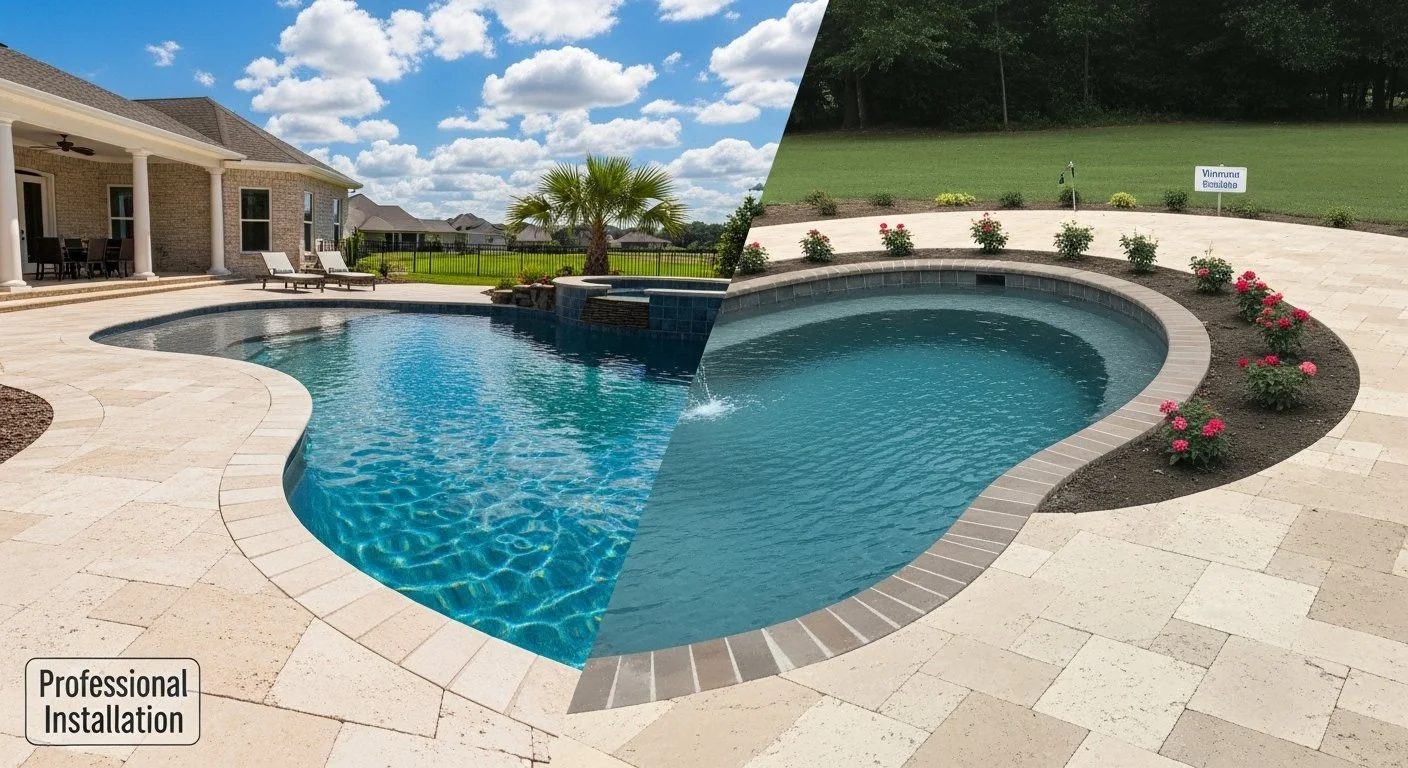
Pool construction is a complex process that requires expertise, precision, and proper planning. Hiring professionals ensures that structural integrity, safety standards, and design elements are all handled correctly.
From excavation to finishing, expert builders can guide you through each step of the process and help avoid costly mistakes. Professional installation also ensures that your pool performs efficiently for years to come.
Conclusion
Both gunite and concrete pools offer durability, strength, and long-term value, but they differ in design flexibility, installation methods, and cost. Understanding these differences allows homeowners to choose the option that best fits their needs and vision.
Whether you prioritize customization or traditional construction, investing in a well-designed pool can significantly enhance your outdoor living space and lifestyle.
Have questions or are you ready to start your dream pool project? Contact us today and let our experts bring your backyard vision to life.
FAQs
1. What is the main difference between gunite and concrete pools?
The main difference lies in the application method and design flexibility. Gunite pools are sprayed using a dry mix process, allowing more customization, while concrete pools use poured or traditional methods.
2. Which pool lasts longer, gunite or concrete?
Both can last for decades with proper maintenance. Longevity depends more on care, environmental conditions, and upkeep rather than the material alone.
3. Are gunite pools more expensive than concrete pools?
Gunite pools are generally more expensive upfront due to customization and labor-intensive construction, but both require long-term maintenance costs.
4. How often do these pools need resurfacing?
Typically, resurfacing is required every 10–15 years depending on usage, maintenance, and environmental factors.
5. Which pool type is better for custom designs?
Gunite pools are better suited for custom designs because they allow flexible shapes, depths, and integrated features like spas and waterfalls.