
Common In-Ground Pool Problems and How to Fix Them Quickly
A backyard pool can transform your home into a relaxing retreat, especially in warm climates where outdoor living is a big part of daily life. For many homeowners, installing a pool means enjoying family gatherings, weekend relaxation, and a beautiful outdoor space all year long.
However, like any outdoor feature, pools can sometimes develop problems. From cloudy water to equipment issues, even the most well-designed in ground swimming pool may experience occasional maintenance challenges. The good news is that most of these problems are common and can be fixed quickly when you understand what causes them.
In this guide, we’ll explore some of the most common issues homeowners experience with custom in ground pools and explain simple ways to solve them before they turn into bigger problems.
Why In-Ground Pool Maintenance Matters
Owning a pool is an exciting investment, but it also comes with responsibilities. Regular maintenance helps keep the water clean, the equipment working efficiently, and the pool structure in great condition.
When small problems are ignored, they can grow into expensive repairs. For example, a clogged filter or a minor leak may seem harmless at first, but over time they can affect the entire pool system.
That’s why understanding basic pool care is essential. With a little attention and quick action, most problems can be handled before they disrupt your backyard enjoyment.
Understanding How Custom In-Ground Pools Work
Before discussing common problems, it helps to understand the basic components of a pool system.
A typical pool includes:
The pool structure itself
A pump and filtration system
Plumbing lines that circulate water
Skimmers and drains that remove debris
Chemical treatments that keep the water balanced
When all of these components work together properly, your pool stays clean and safe. Problems usually occur when one part of the system stops functioning as it should.
Problem #1: Cloudy Pool Water
Cloudy water is one of the most common complaints among pool owners.
Instead of sparkling blue water, the pool begins to look dull or hazy, which can make swimming less enjoyable.
What Causes Cloudy Water?
Several factors may contribute to cloudy water:
Poor filtration
Unbalanced chemical levels
Dirt or debris buildup
High swimmer activity
How to Fix It Quickly
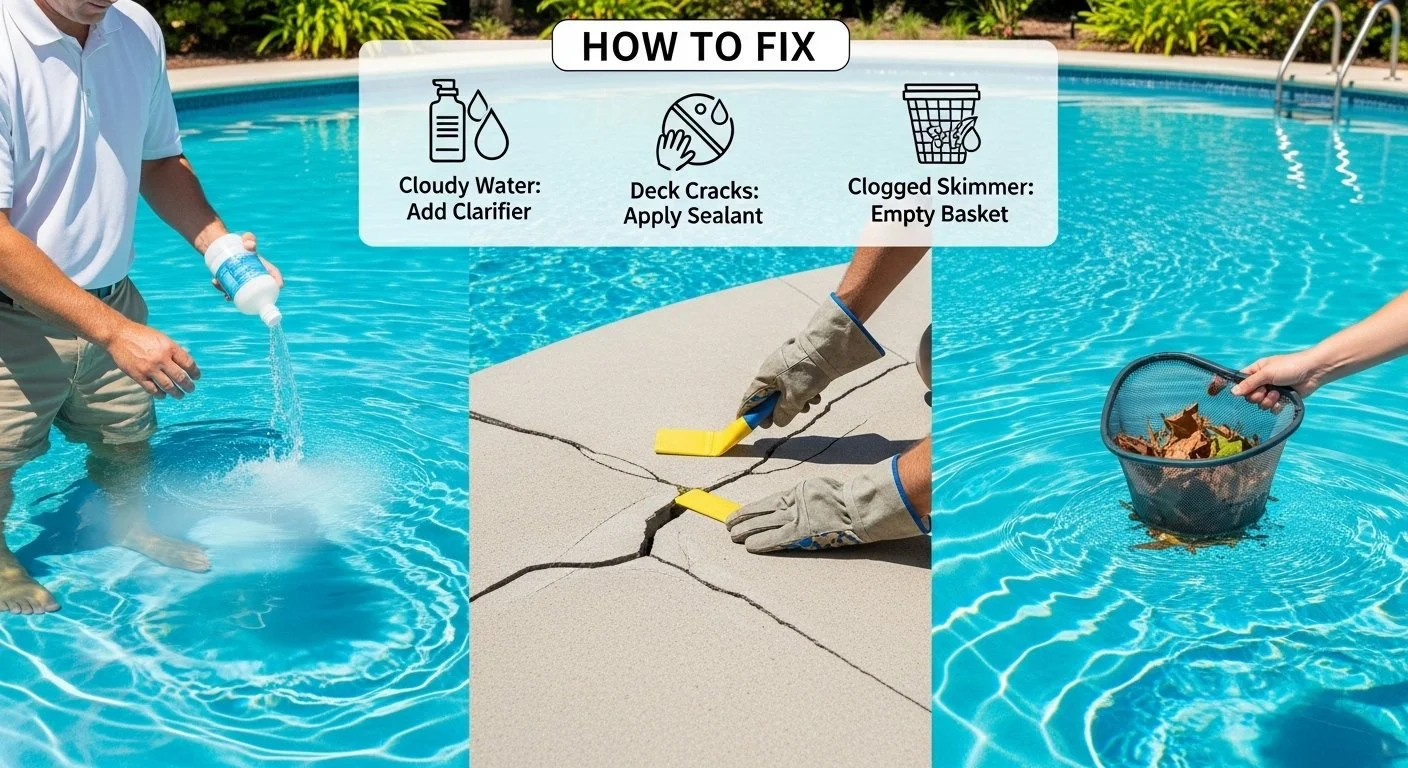
Start by checking the filter system and running the pump for a longer cycle. Next, test the water chemistry and adjust the chemical balance if necessary. Cleaning the filter and removing debris from the pool can often restore clarity within a day or two.
Problem #2: Algae Growth
Algae can appear quickly if pool chemicals are not properly balanced. It usually shows up as green, yellow, or black patches on the pool surface.
Signs of Algae
Slippery pool walls
Green or cloudy water
Dark spots on the pool floor
Quick Solution
Brushing the pool walls and applying shock treatment usually eliminates algae quickly. Maintaining proper chlorine levels and regular cleaning helps prevent it from returning.
Problem #3: Pool Pump Not Working Properly
The pump is the heart of the pool system. It circulates water through the filter and keeps the pool clean.
When the pump stops working correctly, water may become dirty or stagnant.
Common Pump Problems
Blocked skimmer baskets
Air trapped in the system
Electrical or motor issues
Simple Troubleshooting
Check for debris blocking the pump basket and ensure water is flowing properly through the system. Sometimes a simple cleaning or resetting the pump can solve the issue.
Problem #4: Water Level Dropping
If you notice the water level dropping faster than usual, there may be a leak somewhere in the pool system.
Some water loss is normal due to evaporation, especially during hot weather. But excessive loss could indicate a plumbing or structural problem.
How to Detect a Leak
One common method is the “bucket test,” where you compare the water loss in a bucket placed near the pool to the water level in the pool itself.
If the pool loses significantly more water than the bucket, a leak may be present.
Problem #5: Pool Filter Issues
Filters remove dirt, oils, and debris from the water. When filters become clogged or dirty, water circulation slows down and the pool becomes cloudy.
Signs Your Filter Needs Attention
Weak water circulation
Cloudy pool water
Higher pressure readings on the filter gauge
Maintenance Tip
Cleaning or backwashing the filter regularly keeps the system working efficiently and prevents larger problems.
Problem #6: Cracks or Surface Damage
Small cracks or surface imperfections can sometimes appear in pools due to temperature changes, ground movement, or normal wear over time.
Minor cracks may only affect appearance, but deeper cracks could lead to leaks.
Regular inspections help catch these issues early before they require larger repairs.
Problem #7: Heater or Temperature Problems
Some pools include heating systems that allow swimming even during cooler months.
If the heater stops working properly, it may be due to:
Dirty filters
Gas supply issues
Thermostat problems
Cleaning the system and checking equipment connections often resolves minor heating issues.
Tips to Prevent Most Pool Problems
The best way to avoid major pool problems is through consistent maintenance.
Here are a few simple habits that help keep pools in excellent condition:
Test water chemistry weekly
Clean the filter regularly
Remove debris from skimmers
Run the pump daily
Schedule seasonal inspections
Even small steps like these can prevent many common pool issues.
Understanding maintenance also helps homeowners better plan long-term costs, including factors that influence inground pool cost such as equipment upgrades or repairs.
When to Call a Professional Pool Builder
While many minor issues can be handled with routine maintenance, some situations require professional expertise.
If you notice major leaks, structural cracks, equipment failures, or recurring water quality problems, it’s best to consult experienced professionals.
The team at Desert Rock Pools has extensive experience designing and building pools that are both durable and visually stunning. If you’re experiencing ongoing issues or planning improvements, visiting their services pagecan help you explore professional solutions tailored to your backyard.
Professional builders can diagnose complex problems and ensure repairs are handled correctly the first time.
Planning Future Pool Improvements
Sometimes pool problems inspire homeowners to upgrade or redesign their backyard space.
For example, homeowners who want a more compact and modern design may consider installing an in ground plunge pool, which is smaller but still provides the refreshing benefits of a traditional pool.
Similarly, if you’re planning to build a new pool in the future, understanding the process behind ground pool installation can help you make better decisions about design, materials, and long-term maintenance.
Upgrading your pool area can enhance both your outdoor lifestyle and the overall value of your home.
Conclusion: Keeping Your In-Ground Pool Clean and Problem-Fre
Owning a pool can be one of the most enjoyable parts of having a backyard, especially in warm areas where outdoor living is part of everyday life. While occasional issues like cloudy water, algae, or equipment problems can happen, most of these challenges are easy to manage when you understand the basics of pool maintenance.
Regular cleaning, balanced water chemistry, and routine equipment checks can prevent many common problems before they start. Taking care of small issues early not only keeps your pool looking beautiful but also protects your investment in the long run.
If you ever face a problem that seems difficult to fix or you want to upgrade your pool with new features, getting professional guidance can make the process much easier. With the right care and expert support when needed, your pool can remain a clean, relaxing, and enjoyable space for many years to come.
FAQs
1. Why does my pool water keep turning cloudy? Cloudy water usually happens because of poor filtration, unbalanced chemicals, or debris buildup. Running the filter longer and adjusting the water chemistry can often solve the problem quickly.
2. How can I tell if my pool has a leak? If your pool is losing more water than normal evaporation levels, it may have a leak. A simple bucket test can help determine whether the water loss is natural or caused by a leak.
3. How often should I clean my pool filter? Most filters should be cleaned every few weeks, depending on how frequently the pool is used. Regular cleaning helps maintain proper water circulation and keeps the pool clear.
4. What is the most common pool maintenance mistake homeowners make? One of the most common mistakes is ignoring water chemistry. When chemicals are not balanced properly, it can lead to algae growth, cloudy water, and equipment damage.
5. When should I call a professional for pool repairs? If you notice structural cracks, ongoing leaks, or equipment that stops working completely, it’s best to contact a pool professional to inspect and fix the issue safely.